
Home / Erectile Dysfunction
Explore the illustrated guide ↓
What causes ED, when it is worth seeing a doctor, and the treatment options available to men today.
Explore selected illustrations, then open a guide to see the full image and related reading.
You Are Not Alone
Erectile dysfunction affects a large share of men, and in most cases it can be addressed. Understanding the cause is the first step toward the right plan.
Erectile dysfunction — difficulty getting or keeping an erection firm enough for satisfying sex — is one of the most common health concerns men face. It becomes more frequent with age, but it is not an inevitable part of aging, and in most cases it can be addressed.
ED is far more common than most men assume. A significant share of men experience some degree of it during their lives, and the likelihood increases with each decade of age. If you are dealing with it, you are in very large company — and there is no reason to face it without help.
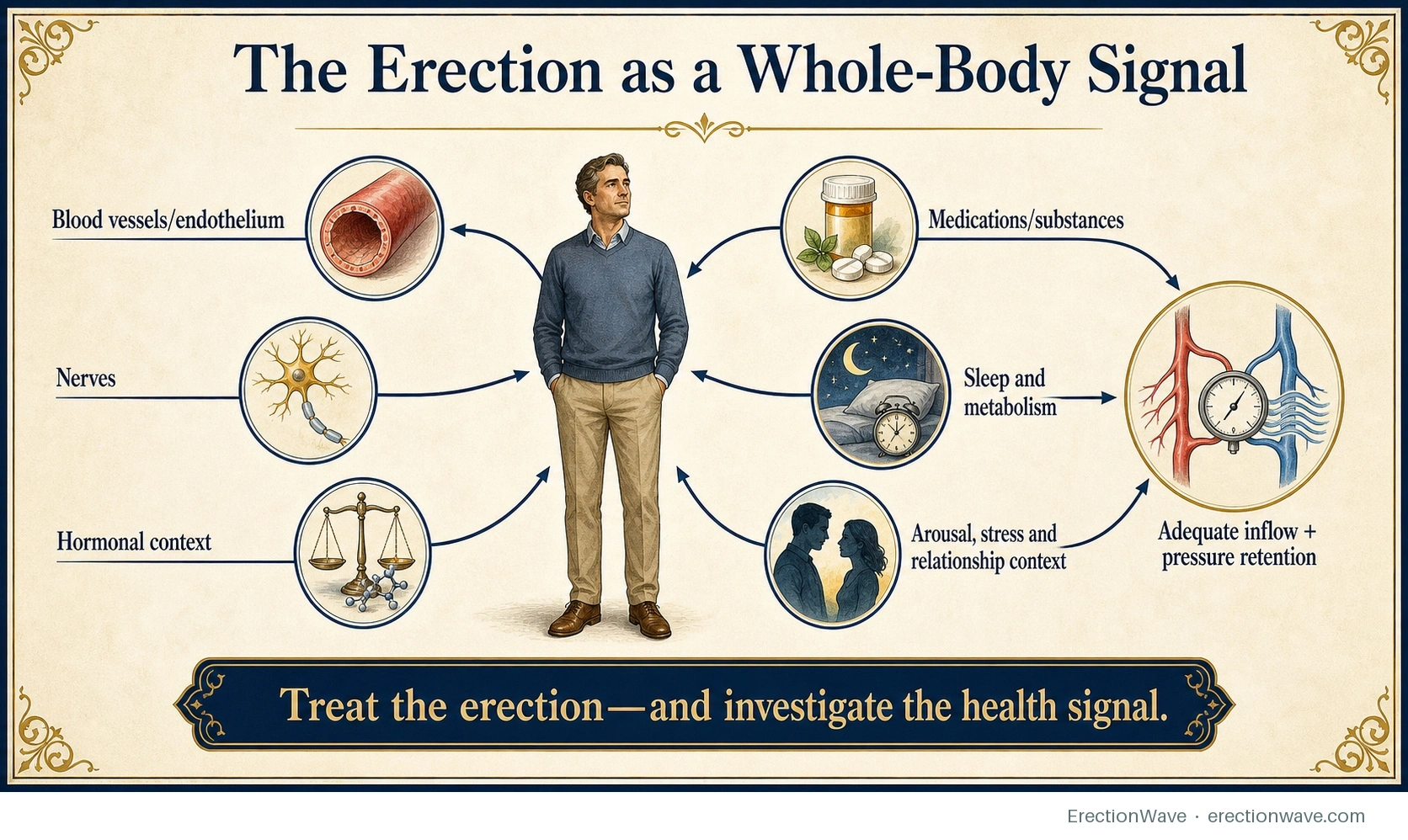
An erection depends on healthy blood flow, intact nerve signaling, adequate hormones, and the right psychological state. A problem in any of these areas can contribute to ED. The most common causes include:
Because ED often has more than one cause, a proper evaluation matters. It can also be an early warning sign of a broader health issue, particularly cardiovascular disease — which is one reason it is worth taking seriously rather than ignoring.
Prostate health can factor in as well. An enlarged prostate (BPH) and some of its treatments are linked to erectile and urinary symptoms, so part of a thorough work-up is ruling that in or out. For men whose evaluation points to the prostate, our colleagues handle the full range of minimally invasive options — including prostate artery embolization — without defaulting to surgery.
It is reasonable to see a urologist if difficulty with erections happens regularly, persists for more than a few weeks, or is causing you distress. You do not need to wait until the problem is severe. An evaluation can identify what is driving your symptoms — and, just as importantly, rule out or catch underlying health concerns early.
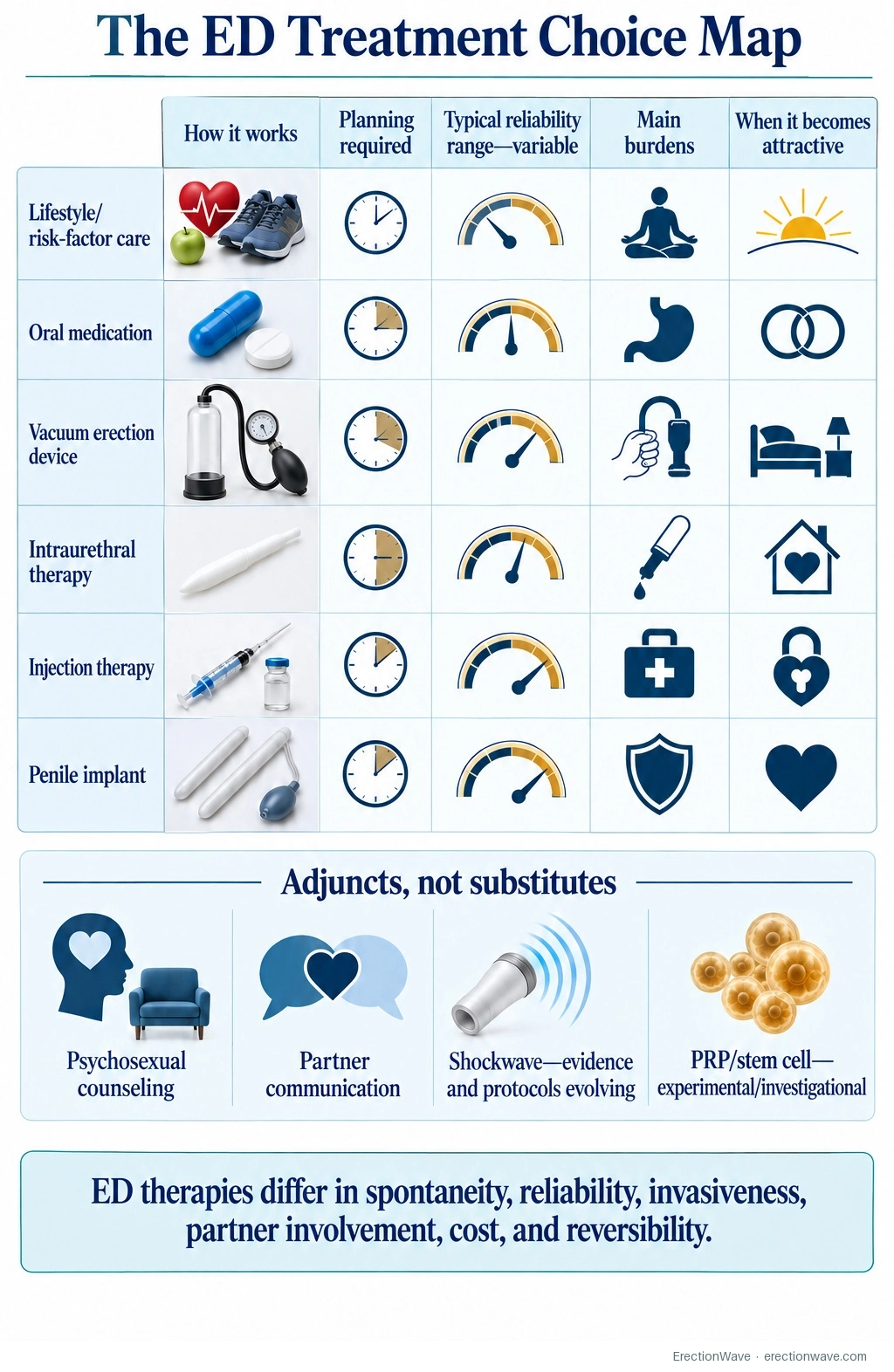
The good news is that ED is highly treatable, and there are more options today than ever. They generally fall into two groups:
For many men, the right answer involves more than one approach. The starting point is always a thorough evaluation with Dr. Shusterman, who will identify the contributing causes and recommend a plan suited to your individual situation.
Explore Your Options
Low-intensity shockwave therapy designed to support healthy circulation. Learn more →
A platelet-rich plasma treatment that targets the underlying tissue. Learn more →
On-demand prescription support that works well for many men. Learn more →
Free Initial Phone Consultation
Speak confidentially with a medical adviser about your situation.
UNDERSTAND YOUR CARE
Erections depend on blood flow, nerves, hormones, medicines, sleep and emotional context working together. A change in function deserves a respectful assessment of the whole pattern, rather than an assumption about age or confidence.
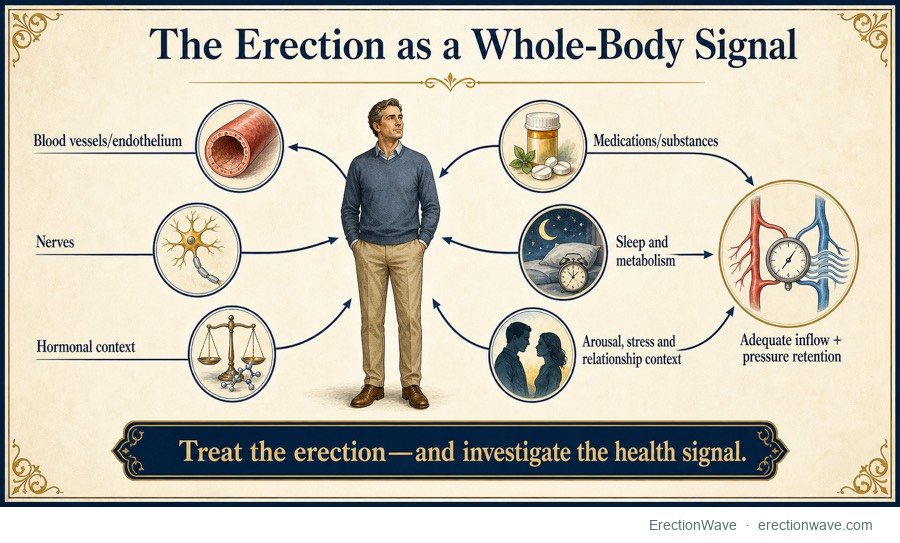
The history asks when the change began, whether it happens consistently, whether spontaneous or morning erections remain, and how desire, ejaculation and relationship factors fit. Diabetes, vascular risk, pelvic treatment, neurologic disease, medicines and substance use may contribute. Psychological and physical factors often overlap.
Evaluation can include an examination and selected laboratory tests. Testosterone testing is interpreted with symptoms and context; a single number is not a complete sexual-health diagnosis. Cardiovascular risk assessment can also matter because penile and general vascular health are connected. Testing is chosen to answer a clinical question, not to build the longest possible panel.
Risk-factor care and counseling may accompany medication or other treatments. Oral medicines, vacuum devices, urethral therapies, injections and penile implants differ in planning, reliability, invasiveness, side effects and reversibility. A treatment that is effective under one set of circumstances may be inconvenient or unsuitable under another.
Ask how to use a prescribed treatment correctly before declaring it unsuccessful. The clinician should review medicine interactions and relevant health precautions. Nitrates can have a dangerous interaction with common oral ED medicines. If considering an office-based therapy, ask about the evidence, realistic benefit, cost and alternatives. No treatment should be described as a guaranteed cure or a substitute for evaluating underlying disease. A useful follow-up measures function, satisfaction and tolerability, with a plan if benefit is partial.
When to seek care: A painful or persistent erection lasting four hours requires emergency care. Chest pain or acute cardiovascular symptoms also require prompt emergency assessment.
Explanation adapted from A Urology Consult in a Book by David Shusterman, MD, chapter 23, “Erectile Dysfunction As A Health Signal.” Original illustration reproduced from the book. NIDDK: erectile dysfunction.